Leading With Purpose: Dr. Rosalie Mince and the Future of Community Colleges

On a recent episode of The EdUp Experience Podcast, Dr. Rosalie Mince offered more than a conversation about higher education. She delivered a masterclass in mission-driven higher education leadership, community partnership, and the evolving role of community colleges in America.
From the moment the interview began, Dr. Mince’s passion for community colleges was unmistakable. “My mission, my heart, my advocacy has always been with community college,” she shared, reflecting on her own beginnings as a community college student. That personal connection fuels her work today as president of Carroll Community College in Westminster, Maryland.
A Community College with a Community Mission
Located roughly 35 miles from Baltimore and 60 miles from Washington, D.C., Carroll Community College serves a largely rural population, offering students access to comprehensive academic and workforce opportunities. Dr. Mince described the College as a place where “close-knit support” meets the “breadth and depth of what the workforce needs.”
What stands out most about Carroll is its extraordinary connection to the community it serves. According to Dr. Mince, more than 90% of Carroll students return to Carroll County after transferring or completing their education. That statistic is remarkable in an era when many rural communities struggle with talent retention.
Why do graduates come back?
Dr. Mince points to the county’s strong quality of life, excellent schools, low crime, and deep-rooted sense of belonging. “People love it here,” she said.
Student Success Through Human Connection
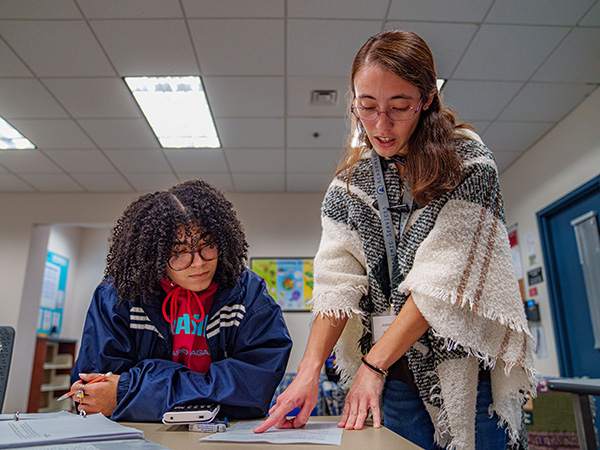
Dr. Mince repeatedly returned to one central theme: relationships matter.
As higher education continues to grapple with post-pandemic realities, shifting demographics, and increasing student needs, Carroll has doubled down on student support. Dr. Mince noted that today’s students are more willing to ask for help and more aware of the support systems available to them.
Rather than viewing that as a weakness, she sees it as growth.
“We’re helping students put a name to things, letting them know that we’re here to support them,” she explained.
That culture of care is reflected in the College’s outcomes. Carroll boasts impressive retention and graduation rates, national recognition from organizations like WalletHub and Research.com, and perhaps most notably, a student satisfaction rate where 98% of students said they would recommend Carroll to a friend.
Those numbers are more than metrics. They are evidence of an institution intentionally centered on student experience.
Reimagining the Strategic Plan
One of Dr. Mince’s proudest accomplishments during her presidency so far has been leading the development of a new strategic plan. But unlike many institutional plans that end up “sitting on a shelf,” she wanted Carroll’s plan to feel alive, authentic, and deeply connected to the College’s identity.
The inspiration came from an inscription on the College’s administration building: Enter to Learn.
That phrase became the foundation for a broader vision: Enter to Learn, Enter to Experience, Enter to Earn.
The framework captures the full student journey, not only academic learning, but also hands-on experience and meaningful career outcomes. It reflects Dr. Mince’s belief that higher education must prepare students both for immediate workforce needs and for lifelong adaptability.
Workforce Development and the Future of Learning
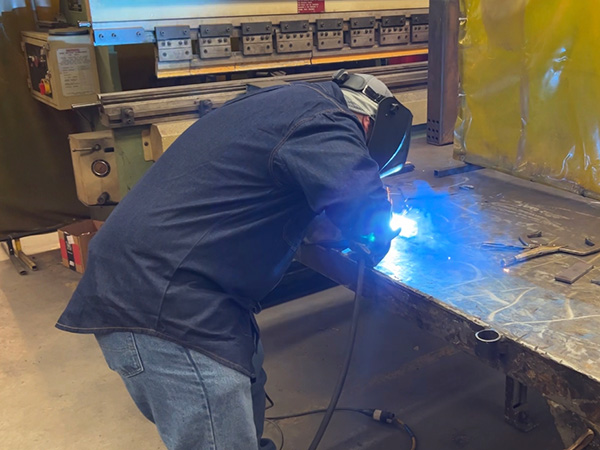
One of the most exciting initiatives underway at Carroll Community College is the creation of the Ratcliffe Applied Technology and Trades Center. Supported through a combination of federal funding, state support, and private philanthropy, the new facility will expand programming in high-demand fields such as welding, HVAC, plumbing, automotive technology, and advanced manufacturing.
The response from employers has been overwhelming.
“We already have waitlists for a number of our programs, and some of them haven’t even started yet,” Dr. Mince shared.
Local businesses are not just hiring Carroll’s graduates. They are helping shape its curriculum, serving as adjunct faculty, and partnering with the College through apprenticeships and experiential learning opportunities. Carroll’s approach demonstrates what modern workforce development should look like: collaborative, responsive, and aligned with regional economic needs.
Embracing AI Without Losing Humanity
Perhaps the most timely portion of the conversation focused on artificial intelligence (AI) and higher education.
Rather than resisting change, Dr. Mince believes colleges have a responsibility to prepare students for the realities of the modern workplace. Carroll is intentionally embedding AI competencies into academic programs while simultaneously emphasizing human-centered skills like communication, teamwork, creativity, and critical thinking.
“We have to embrace it,” she said of AI. “It would be remiss of us if we were not preparing students for what they need to be able to enter into the workforce.”
At the same time, she stressed that technology cannot replace the human relationships that define effective education.
That balance—between innovation and humanity, between workforce readiness and personal growth—became one of the defining messages of the interview.
Leadership Rooted in Teamwork
My mission, my heart, my advocacy has always been with community college.
When asked about her higher education leadership philosophy, Dr. Mince rejected the idea that presidents must carry the weight of an institution alone.
“I don’t ever feel like it’s all on me,” she said. “I know that I have this entire institution behind me.”
That collaborative mindset appears to be central to Carroll’s success. Dr. Mince repeatedly praised her executive team, faculty, staff, community partners, and professional organizations that help higher education leaders learn from one another.
Indeed, her approach is less about individual authority and more about collective momentum.
A Vision Grounded in Balance
As the conversation drew to a close, Dr. Mince offered a thoughtful perspective on higher education’s future. Rather than chasing extremes, she believes colleges must pursue balance:
- Balancing workforce preparation with critical thinking
- Balancing AI with human-centered learning
- Balancing short-term needs with long-term vision
It was a fitting conclusion from a higher education leader who clearly understands both where higher education is today and where it must go next.
In a time when many institutions are searching for direction, Dr. Rosalie Mince and Carroll Community College offer a compelling reminder that innovation works best when it is rooted in purpose, partnership, and people.