Commercial UAS (Drone) Pilot Certificate
At a Glance
Launch an Exciting Career as a Drone Pilot
In our Commercial UAS (Drone) Pilot workforce training program, you will get hands-on flight time with industry-leading drones. Learn all the different industries & applications that use drones, and leave with a portfolio of captured footage to show potential clients or employers.
Schedule:
Offered Fall & Spring; daytime weekdays & Saturdays
Next Start Date:
Feb. 3, 2026
Approx. Number of Hours/Months:
95 hours/4 months
Program Cost:*
$2,536
Certifications Earned:
FAA Remote Pilot Certificate (Part 107); Basic Proficiency Evaluation for Remote Pilot (BPERP) Certificate
What You’ll Learn
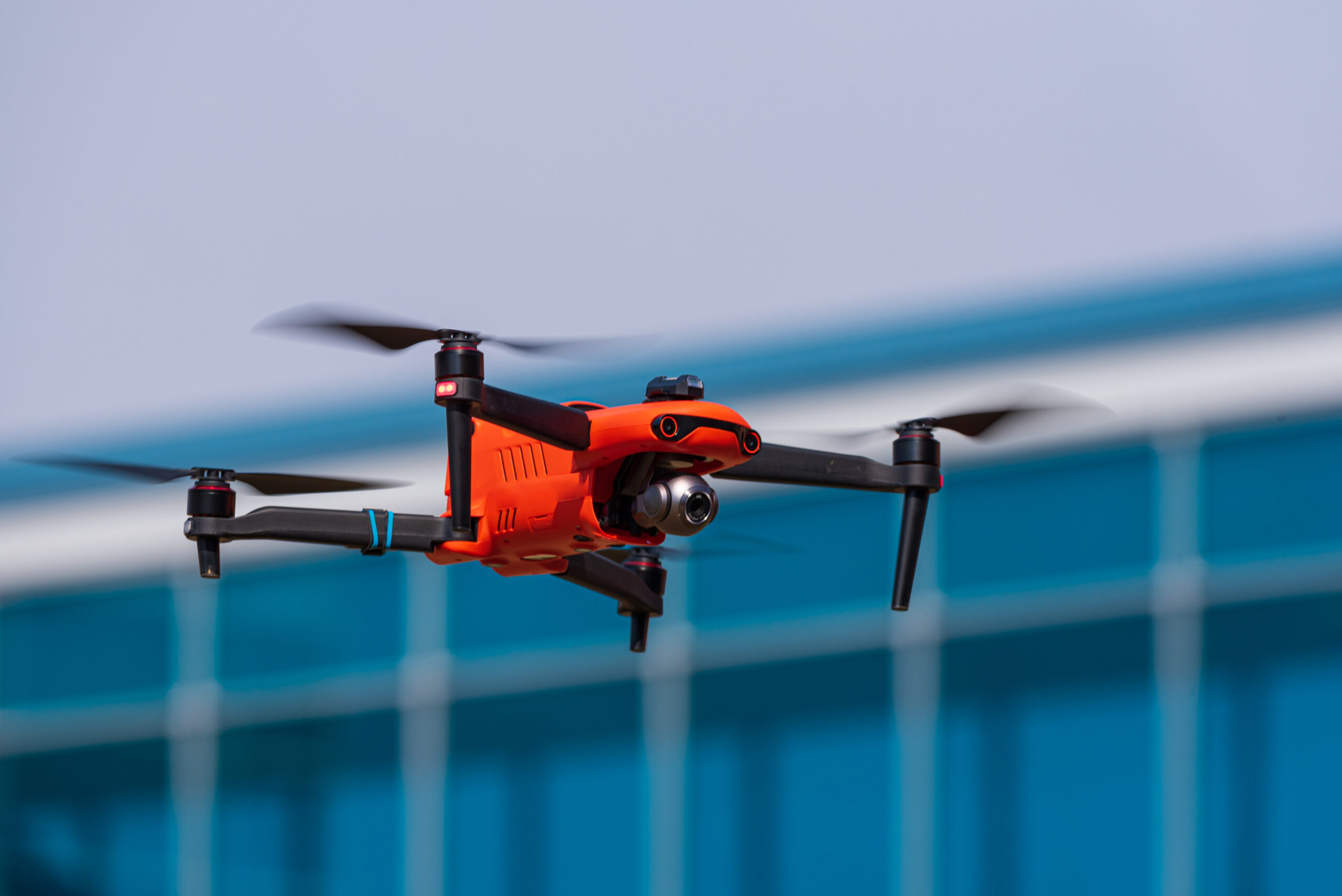
Whether you’re looking to start a career or add a valuable skill to your toolkit, our Commercial UAS (Drone) Pilot Certificate program will teach you the essential knowledge and hands-on techniques to become a certified drone pilot.
- Rules and regulations about airspace
- Industry standards and practices
- How to fly a drone safely
- Different types of drones and their functions
- How to collect, edit, and analyze video & photos
- How to process data to create 2D images
The instructor had years of experience and knowledge as a commercial drone pilot which he conveyed to the class.
Financial Assistance
Curriculum
Through a mix of classroom instruction, simulator training, and real-world flight experience, you’ll build the skills needed to become a certified drone pilot. Each course builds on the last, guiding you from basic flight knowledge to advanced aerial photography and even launching your own drone business.
Students must complete all courses in the series within a year of starting the program. The courses must be taken consecutively. (Students who are current Part 107 pilots and have 15 hours of recorded UAS flight time are exempt from DRN-020 and DRN-021.)
NOTE: Not all courses are offered every term.
Take the first step to becoming a commercial drone pilot. Learn the rules and regulations to become certified and start earning money with your drone. Review all the topics in the FAA Part 107 to ensure you are flying legally. It’s not all bookwork as you begin flying on a simulator to help build your stick control while you go through the FAA guidelines. End the class with a night flight demo!
Move from the simulator to actual hands-on flying. Unlike some drone programs, this class will give you the basic skills to fly a commercial drone. Experience what it’s like to see the world from 400 feet above the earth. Prepare to sit for the Unmanned Aircraft General – Small (UAG) exam with practice exams and reviews of what might be on the test. Prerequisite: DRN-020 Commercial Remote Pilot Pt. 1.
Now that you are a commercial pilot, take to the skies with professional-grade drones and learn how to capture photos and videos. Learn to plan and fly missions and collect images for your intended purposes. Get experience flying on different drones that are capable of doing a variety of jobs. Show off your skills by completing the National Institute of Standards and Technology (NIST) remote pilot test lane that will show just how much control and accuracy you have. Prerequisites: DRN-021 Commercial Remote Pilot Pt. 2, Part 107 and 15 hours of flight time.
Love taking pictures or videos from the air but not sure what to do with them? Get a foundational understanding of how to edit using industry-leading software for both the visual and data world. Learn the art and science of editing and processing what you capture with your drone. Present your edited images as if you were presenting to a potential client. Get the next steps on how to launch your own business with entrepreneur help. Prerequisite: DRN-022 or DRN-002.
Licensure/Certification Earned
Students are prepared for two industry certifications: the FAA Remote Pilot Certificate (Part 107) and the Basic Proficiency Evaluation for Remote Pilot (BPERP) Certificate.
Since graduating Carroll’s drone program I have moved on to my third job working in the drone industry. Beginning with a summer mapping agriculture in Ohio, followed by a year and a half flying a drone for security at a Kia manufacturing plant in Georgia, to a full-time operational manager flying 800 drones at Disney Springs, it has been a great experience so far!
Why Choose Carroll’s Drone Pilot Certificate Training?
- Gain Real-World Skills: Get comprehensive training in drone piloting, including flight techniques, data collection, and professional editing and processing of aerial imagery.
- In-Person Learning: Unlike many online-only drone programs, our in-person format offers direct support from experienced instructors and the opportunity to network with them and fellow students.
- Master an Emerging Technology: Drones are rapidly transforming industries, from agriculture to real estate. Stay ahead of the curve by learning how to use this cutting-edge technology today.
- Build a Portfolio: Students who complete our program will leave with a portfolio of at least 2 edited photos, a video, and a 2D model image.
- Drones Included: The College provides entry-level and professional-level drones to train with as part of program cost.
UAS Student Projects
Career Outlook
The demand for drone pilots is rapidly growing, with the Association for Unmanned Vehicle Systems International (AUVSI) predicting over 100,000 drone-related jobs by 2025. Industries that are increasingly relying on drones for data collection, property inspections, and safety monitoring include:
- Agriculture
- Construction
- Real Estate
- Insurance
- Energy
- Marketing
- And others
Many drone pilots find success through entrepreneurship, offering services like aerial photography, surveying, or mapping. Others work full-time for utility companies, marketing firms, or government agencies. One of the most effective ways to use a drone license is by pairing it with an existing career—enhancing services and expanding opportunities.
Salaries vary based on specialization and experience. For example, drone pilots in agriculture can earn between $60,000 to $90,000 annually, while those involved in specialized operations like LiDAR mapping or defense contracting may command salaries exceeding $100,000.
- What is a UAS pilot and how do I become one?
A UAS (Unmanned Aircraft Systems) pilot, also known as a drone pilot, operates drones for commercial, industrial, or public safety purposes. UAS pilots commonly perform tasks such as:- Aerial photography & videography
- Infrastructure inspections
- Mapping & surveying
- Data collection & monitoring
To become a commercial UAS pilot, you must:
- Complete a training program, such as Carroll’s
- Pass the FAA Remote Pilot (Part 107) knowledge exam
- Gain hands-on flight experience
- Stay current with FAA regulations and renew certification every 2 years.
- What are the steps to getting a certified drone pilot license?
To earn an FAA Remote Pilot Certificate (Part 107), you must:- Meet eligibility requirements:
- Be at least 16 years old
- Read, write, speak, and understand English
- Be in a physical and mental condition to safely operate a drone
- Create an IACRA account to obtain an FAA Tracking Number (FTN).
- Schedule and pass the FAA Part 107 knowledge test (minimum score of 70%).
- Submit FAA Form 8710-13 through IACRA.
- Pass a TSA background check.
- Receive your FAA Remote Pilot Certificate and complete online recurrent training every 24 months to maintain it.
- Meet eligibility requirements:
- What qualifications do I need to become a UAS pilot?
To work as a commercial UAS pilot, you must hold an FAA Remote Pilot Certificate (Part 107) and demonstrate the ability to operate drones safely and legally. Employers may also look for:- Knowledge of airspace regulations, weather, and flight planning
- Experience with data collection and processing
- Additional certifications or security clearances, depending on the industry
- Is Carroll’s drone operator school FAA approved?
Carroll Community College is recognized by the FAA as a member of the UAS Collegiate Training Initiative (CTI). This designation indicates that the program’s curriculum aligns with FAA expectations and supports safe, legal commercial drone operations and workforce development in UAS-related careers. - What makes Carroll’s UAS pilot program different from other drone schools?Carroll’s UAS pilot program emphasizes hands-on, workforce-focused training, including:
- Extensive flight time using industry-grade drones
- Instruction in aerial photography, video production, and data processing
- Use of flight simulators and real-world scenarios, including night operations and NIST course practice
- Preparation for the FAA Part 107 exam and the Basic Proficiency Evaluation for Remote Pilot (BPERP)
- Development of a professional portfolio of flight footage
- Do I need my own drone?
No. Students are not required to own a drone. Carroll provides drones for training, although students may choose to use their own equipment if desired. - Are there prerequisites for this program?
No prior drone or aviation experience is required to enroll in the program. - Are there any requirements to complete the program?
To successfully complete the UAS pilot program, students must:- Earn the FAA Remote Pilot Certificate (Part 107)
- Complete at least 35 hours of documented flight time
- How much flying will we do?
The program includes at least six Saturdays dedicated to hands-on flight training. While flying is a critical component, the program also emphasizes data management, image processing, and post-flight analysis, which are essential skills for professional UAS pilots. - Where does the training take place?
This is a hybrid program. Most classes are held in person at Carroll Community College, with some instruction delivered remotely. - Is financial assistance available?
Yes! This program is eligible for tuition assistance. - Who should take this training?
This program is ideal for individuals who:- Have strong hand-eye coordination and enjoy working with technology
- Want to add commercial drone operations to their professional skill set
- Are interested in industries such as marketing, inspections, agriculture, public safety, or media
- Prefer work that offers variety in location, tasks, and outcomes
Related Professional Skills & Job Training Courses
Get Started Today
410-386-8100 | wbce@carrollcc.edu | Building A, Room 115
*Unless noted, cost does not include any required textbooks and related materials, applicable licensing fees, background check fees, testing fees or prerequisite courses.