Certified Clinical Medical Assistant Certificate
At a Glance
Become the Heart of Healthcare as a Clinical Medical Assistant
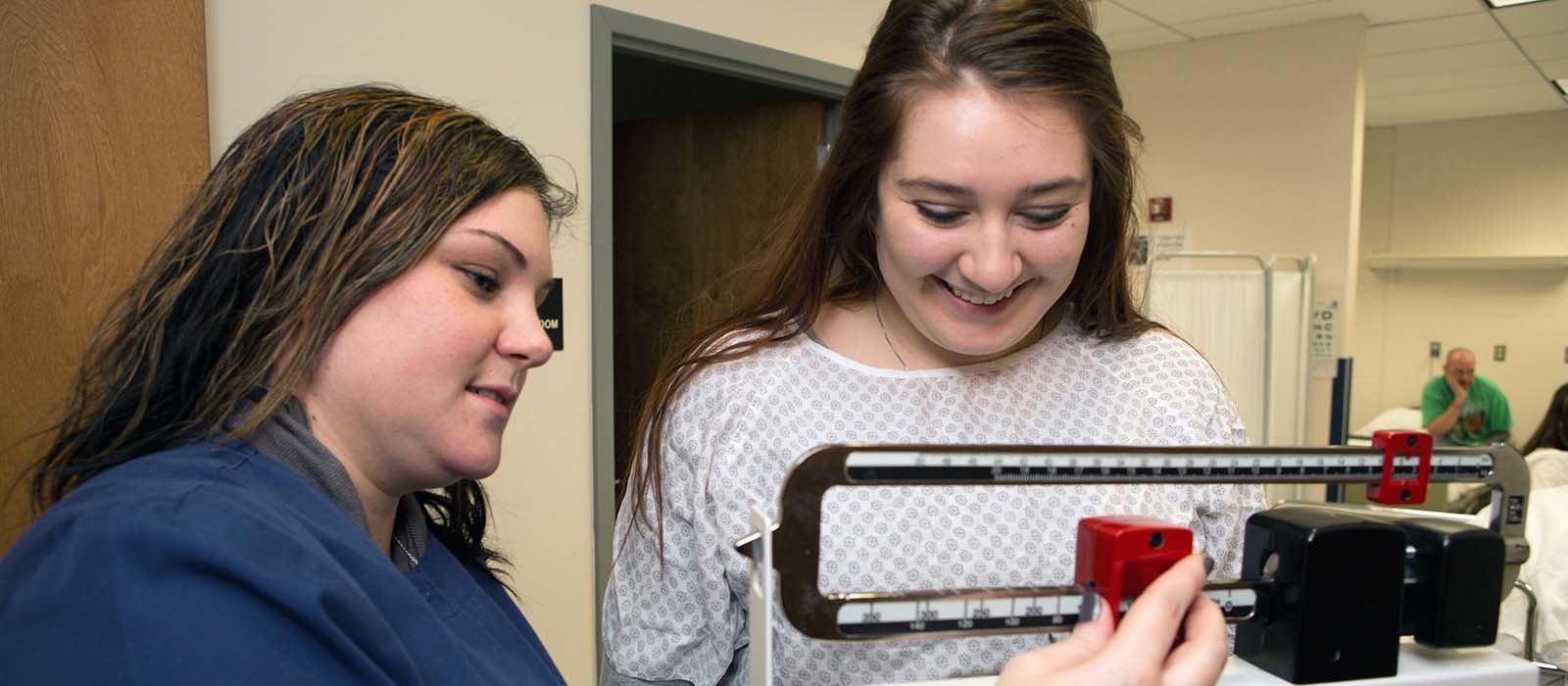
Our Clinical Medical Assistant Certificate program provides hands-on training to equip you with the in-demand skills needed to perform routine administrative and clinical tasks to keep physician, podiatry, chiropractic, and other health practitioner offices running smoothly. Many of our students are offered jobs where they completed their clinical training.
Schedule:
Hybrid program offered Fall & Spring; meets in-person on Wed. evenings
Next Start Date:
April 1, 2026
Approx. Number of Hours/Months:
451 hours/6 months
Program Cost:*
$5,433 (plus $165 to sit for exam); Tuition Assistance Available
Certification Earned:
Certified Clinical Medical Assistant
Min. Occupational Requirements:
18 years old or older; high school diploma or GED®
What You’ll Learn
In our Clinical Medical Assistant (CMA) Certificate program, you’ll gain the knowledge and hands-on skills needed to support both the clinical and administrative sides of a healthcare facility, including:
- Front office operations & administrative tasks
- Electronic Health Records (EHR) management
- Phlebotomy & blood draw techniques
- EKG administration & interpretation
- Basic anatomy, physiology & pharmacology
- Measuring & recording vital signs
- Monitoring for signs of illness or infection
- Performing basic admission assessments
- Assisting with medication administration
- Delivering patient-focused customer service
Financial Assistance
Curriculum
Training takes place at Carroll Community College in a hybrid format, with 4 weeks (120 hours) of clinical experience at various medical offices and clinics in Carroll County.
View all current course offerings. Not all courses are offered within every term schedule.
This required orientation prepares students for the certified clinical medical assistant training program. Topics include registration into the National Healthcare Association’s website, how to navigate, and an overall review of the program. This course includes a clinical component. The clinical sites recommend that you’ve received a COVID-19 vaccine. You must also provide written documentation of MMR and Varicella immunity, negative TB test or chest x-ray within the last 6 months, Hepatitis B immunity or waiver, current flu vaccine, and Tdap vaccine in the last 10 years. Students may be required to wear a surgical mask or a fit tested N95 mask or equivalent mask while in the clinical setting. No facial hair, which interferes with the seal of the mask is permitted. Fit testing and N95 mask will be provided to you by the College.
Gain the foundational knowledge and basic science to start your training as a medical assistant. Review health care systems and settings, medical terminology, basic pharmacology, nutrition and psychology. Understand the critical role and responsibilities of a medical assistant and begin to speak the language of medical professionals. You’ll learn to safely deliver and provide education on medications, assist patients in reaching their nutrition goals, and develop interpersonal skills important to mental health care. Participate in hands-on pharmacology skills practice. Learn how to work with team members and manage challenging patient situations. Course includes an online component; internet access required.
Learn essential anatomy and physiology necessary for success in clinical patient care. Topics include in-depth body structures and organ systems, pathophysiology and disease processes, and microbiology. Learn how major body systems interact to maintain homeostasis and how abnormalities in these systems are reduced using proactive patient education, identified when present, and treated with the latest evidence-based practices. Delve into the fundamental molecules of life, microorganisms, pathogens and infection considerations. Practice hands-on eye and ear, OB/GYN and pediatric procedures. Continue to build the soft skills requested by employers. Course includes an online component; internet access required. Prerequisite: Successful completion of AHE-651
Prepare to care for patients in the clinical setting. Learn general patient care tasks, infection control standards, and test and laboratory procedures including phlebotomy, EKG and cardiovascular tests. Review patient care coordination and education activities, administrative assisting, communication and customer service, and medical law and ethics considerations. Practice hands-on urine collection and analysis, laboratory tests, phlebotomy and related testing, cardiac and respiratory procedures, clinical communication, infection control procedures, vital signs and body measurements, and minor surgical tasks. Complete your study of soft skills. Comprehensive exams will be given at the end of this course for certification preparation. Course includes an online component; internet access required. Prerequisites: Successful completion of AHE-651, AHE-652
Continue to build your skills caring for patients in the clinical setting and practice the same skills covered in Certified Clinical Medical Assistant–Part 3. Comprehensive exams will be given at the end of this course for certification preparation. Course includes an online component; internet access required. Prerequisites: Successful completion of AHE-651, AHE-652, AHE-653
Clinical externship combining front and back medical office skills. Certified Clinical Medical Assistant students who have successfully completed Parts 1–4 of their training will have an opportunity to practice administrative and clinical skills in a clinical setting working with the staff, patients and families visiting the physician’s office for well and sick visits. Prerequisites: Successful completion of AHE-651, AHE-652, AHE-653, AHE-654
Certified Clinical Medical Assistant students who have successfully completed Parts 1–5 of the Certified Clinical Medical Assistant training continue and complete their clinical externship combining front and back medical office skills. Students must register for Medical Assistant Clinical 1 and Medical Assistant Clinical II at the same time. Prerequisites: Successful completion of AHE-651, AHE-652, AHE-653, AHE-654, AHE-655
Licensure/Certification Earned
Students who complete this training are prepared to take the certification exam, and are eligible for national certification (for an additional fee) as a Certified Clinical Medical Assistant through the National Healthcareer Association.
My instructor was amazing and became a great mentor to me. She encouraged me every step of the way and helped ease my terrible test anxiety.
Why Choose Carroll’s Clinical Medical Assistant Training?
- Proven Results: Our students have had 100% pass rate on the National Healthcare Association Certification Exam for the past 2 years.
- Short-Term Program: Complete courses and earn your certification in only 6 months.
- Targeted Training: Gain the exact skills employers are looking for, both clinical and administrative.
- Real-World Experience: Learn from expert instructors with years of healthcare experience.
Career Outlook
Clinical Medical Assistants are in high demand across the country, and that demand is only expected to grow.
According to the U.S. Bureau of Labor Statistics, employment of medical assistants is projected to increase by 15% from 2022 to 2032, which is much faster than the average for all occupations. In fact, more than 119,000 job openings are projected each year during this time frame, as healthcare providers seek trained professionals to support growing practices and replace retiring workers.
This rapid growth means that certified Clinical Medical Assistants can count on strong job security and a steady stream of employment opportunities across hospitals, private practices, urgent care centers, and specialty clinics.
- Why should I get Clinical Medical Assistant certification?
Clinical Medical Assistant certification is strongly recommended by employers. Many doctor’s offices, clinics, and healthcare facilities give hiring preference to certified medical assistants because certification demonstrates that you have met national competency standards and are prepared to provide safe, high-quality patient care.Upon successful completion of the program, students are eligible to sit for a national certification exam through the National Healthcareer Association (NHA). - What does the Medical Assistant training program at Carroll Community College include?
Carroll’s Medical Assistant training program provides comprehensive instruction in both clinical and administrative skills used in healthcare settings. The program includes:- Patient intake, vital signs, and medical documentation
- Clinical procedures such as phlebotomy, EKGs, and specimen collection
- Infection control, safety, and HIPAA compliance
- Medical terminology and basic anatomy
- Administrative tasks, including scheduling and electronic health records
- Preparation for national certification
- How long does it take to complete the medical assistant training program?
The program can be completed in approximately 5–6 months, depending on scheduling and successful completion of clinical requirements. - Does the program include hands-on clinical or lab experience?
Yes. The program includes hands-on lab training as well as supervised clinical experience in medical offices and clinics within Carroll County. This real-world experience allows students to apply classroom skills in professional healthcare settings. - Do I need prior experience to enroll in the medical assistant classes?
No prior healthcare experience is required. The program is designed for beginners and career changers and starts with foundational knowledge before progressing to clinical skills. - Are there any prerequisites for the CMA program?
Yes. Before enrolling, students must complete:- First Aid and CPR training
- A required 3-hour orientation session
Before beginning clinical training, students must provide documentation of:
- MMR and Varicella immunity
- A negative TB test or chest X-ray within the past 12 months
- Hepatitis B immunity or signed waiver
- Seasonal flu vaccination (required during Spring & Fall semesters)
Clinical sites may also require criminal background checks and drug screenings at an additional cost.
- Can I become a medical assistant with on-the-job training only?
While some employers may provide limited on-the-job training, most healthcare facilities prefer or require formal education and national certification. Completing a structured training program improves job readiness, expands employment opportunities, and prepares students to meet certification and employer standards. - Is financial assistance available?
Yes! This program is eligible for tuition assistance. - Where are the training locations?
Training is delivered in a hybrid format, with classroom instruction at Carroll Community College and required clinical experience completed at medical offices and clinics throughout Carroll County. - What job opportunities are available after completing this program?
Graduates may qualify for entry-level Clinical Medical Assistant positions in doctor’s offices, clinics, and urgent care centers. Employment requirements vary by employer and may include certification. - Who should take this training?
This program is ideal for individuals who are compassionate, detail-oriented, and interested in working directly with patients. It is well suited for those who want to support vulnerable populations, promote health and wellness, or explore future career pathways in healthcare or nursing.
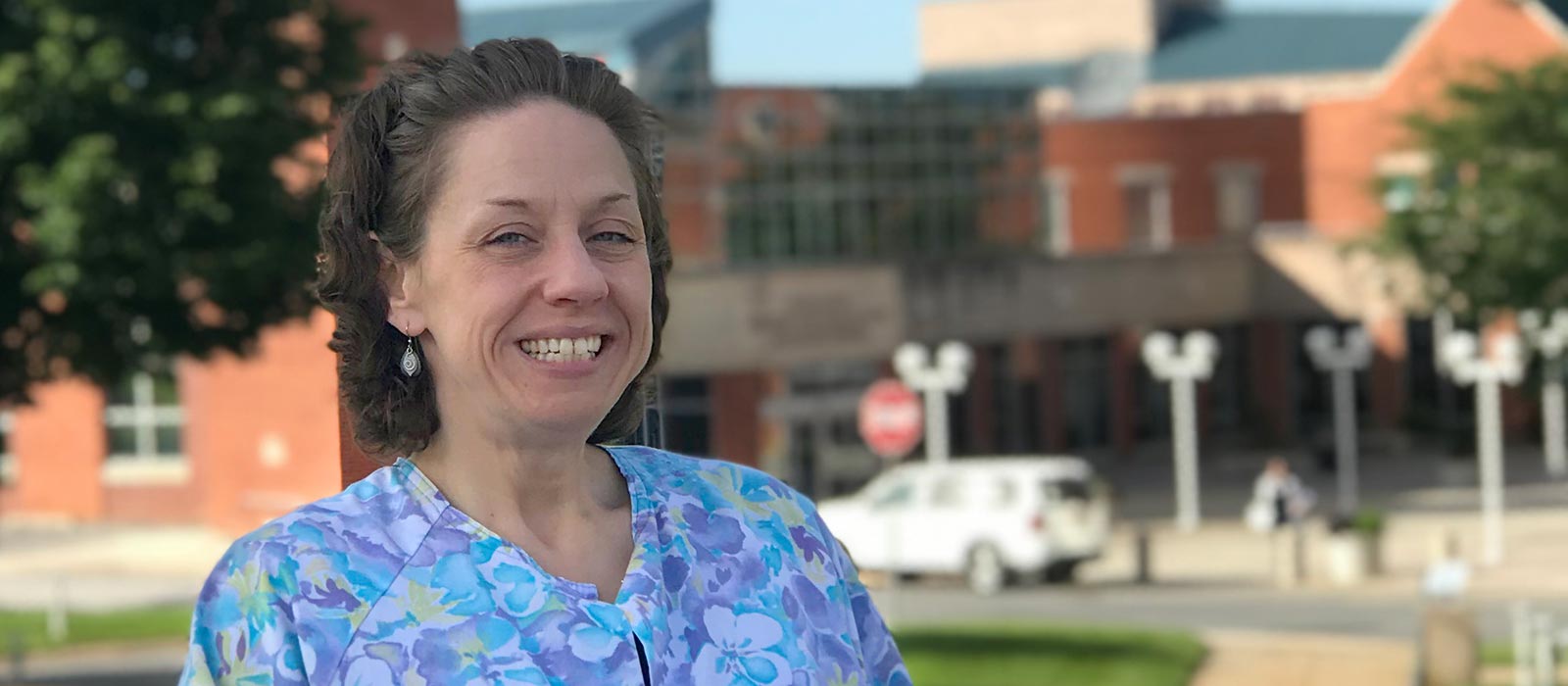
Anna Basgier: Leaping Into a New Life
Read More about Anna Basgier: Leaping Into a New LifeGet Started Today
410-386-8100 | wbce@carrollcc.edu | Building A, Room 115
*Unless noted, cost does not include any required textbooks and related materials, applicable licensing fees, background check fees, testing fees or prerequisite courses.