Community Conferencing of Carroll County

Contact Us
Program Coordinator & Lead Facilitator
410-386-8161
CCOCC@carrollcc.edu
Carroll Community College has now partnered with Community Conferencing of Carroll County, and we’re excited to continue serving our community through this powerful conflict-resolution program.
A community conference is a voluntary and free meeting where people affected by harmful behavior come together to talk, listen, and find a way forward. These meetings bring together neighbors, schools, government agencies, faith communities, organizations, and/or families to repair harm, rebuild trust, and create understanding among everyone involved.
During a conference…
- Those harmed share how the incident affected them.
- Those responsible for the harm listen, acknowledge their impact, and help decide how to make things better.
Features:
- Led by a trained community facilitator
- Voluntary for everyone involved
- Confidential, when appropriate
- Everyone participating has a voice in finding a solution
- Support & resources are available for participants
- Those responsible must acknowledge involvement before participating
- A copy of the agreement is provided to all participants
Benefits:
- A safe space to share how the incident affected you
- Empowers people to resolve conflicts themselves
- Builds understanding & empathy among participants
- Increases possibility of receiving restitution
- Offers a sense of closure & healing
- Helps those who caused harm take responsibility & repair damage done
- Faster & more personal than formal systems
- Brings everyone together to create solutions
- Services are free of charge
Referral Forms
Together, we figure out how to make things right.
- What is the difference between a Community Conference and Community Mediation?
Community Conferencing is a restorative justice process to bring together people impacted by a wrong with the person who did the harm. The goal is to hear from everyone involved about how they were impacted and together as a group come up with a plan on how to make things right.Community Mediation is a process that brings two or more people together who have a conflict or need to have a difficult discussion with a neutral mediator(s) who facilitates the communication and the process. The mediators work on understanding each participant’s perspective and experience. From the discussion, they identify the specific topics people are in conflict about and then facilitate the participant’s development of solutions to resolve the conflict.Both processes are voluntary and confidential.
- Who gets referred for a conference?
Most referrals are of youth and children who are involved in a significant conflict or have caused some harm to someone else. - What kind of conflicts or harm?
All manner of issues. Bullying, harassment, fights, shoplifting, destruction of property, etc. - Do I have to participate?
All parties voluntarily participate in a conference. - Why should I participate in a conference? What are the benefits?
There are many benefits. Everyone gets a chance to have a say in deciding how to make a situation better. It provides a safe place to let others know how you have been affected by the conflict. You will have a trained facilitator assist you to resolve your own conflict, rather than relying on others to do it for you. If you caused harm, you have the opportunity to “make it right” and put this matter behind you. - Who refers the matters for a conference?
Most of the referrals come from the court system (Department of Juvenile Services, State’s Attorney’s Office) or from Carroll County Public Schools. Private citizens are able to request the service for themselves. - How many meetings are there? How long does it take?
There is one meeting, usually of 1 to 1 ½ hours duration. - How likely is the conference to help?
Highly likely. A written agreement, signed by all parties, is achieved about 95% of the time. Surveys of participants after the conference show that well over 90% express a high degree of satisfaction to questions that include: “Did you think the conference was fair?” “Did the conference help to resolve the situation?” “Would you recommend a community conference to others?” - Where did this idea of conferencing come from?
While this approach seems somewhat “new” as a way to resolve conflicts and/or settle justice complaints (charges), it actually is an “old school” approach common to most early societies. The emphasis on responding to harm by getting the person(s) harmed together with the person(s) who caused the harm and giving them the opportunity to resolve it is very old, tried and true. - Do I have to pay for this service?
No. Community Conferencing is supported by grants from the State of Maryland’s Administrative Office of the Courts and private donations. - Who will facilitate the conference? What qualifications do they have?
All of our facilitators have been fully trained in the community conferencing model. Our current facilitators all had prior careers in education or juvenile justice. - What is Restorative Justice and what does it have to do with Community Conferencing?
“Restorative Justice” is a term that describes a way of looking at justice that emphasizes the harm that is done to victims, and the importance of the opportunity for the person(s) who caused harm to take responsibility for that harm and do what they can to “make it right”. This approach to justice is somewhat different than one that understands justice to be entirely about punishment. Community Conferencing, especially when it occurs in the context of a referral from the justice system, is an expression of Restorative Justice.
Board Members
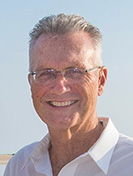 Delmas Wood is the Program Director of Community Conferencing of Carroll County (Maryland), which is a restorative justice initiative offering alternative dispute resolution. Mr. Wood retired as Executive Director for Baltimore City for the Maryland Department of Juvenile Services, in which capacity he directed all intake, probation, community detention, and aftercare services for delinquent youth in the city of Baltimore. Mr. Wood worked for DJS for 39 years, beginning as a probation officer and serving in a range of management positions, including statewide responsibilities as Director of Community Justice and Acting Assistant Secretary.
Mr. Wood has served as the Chairman of the Community Advisory Board of the Silver Oak Academy, a residential school for youth involved with the juvenile justice system, since 2015. Mr. Wood teaches a course on Fatherhood to young fathers who are residents of the program. He also helps lead a group of community volunteers (Kairos Torch) presenting a faith-based retreat and mentoring ministry.
Mr. Wood earned his B.A. in psychology at Morningside College in Sioux City, Iowa and his M.Ed. in Human Development (Child Studies) at the University of Maryland.
Mr. Wood has taught at McDaniel College for over 20 years; courses in Criminology, Sociology of the Family, and Deviance and Delinquency, and Restorative Justice.
Mr. Wood served as the founder and Chairman of the Maryland Task Force on Juvenile Sex Offenders, a multi-disciplinary group which assessed needs and plans statewide policy for the handling of sex offenders. He also served as Chairman of the “Task Force on Mentoring and Monitoring Youth in the Juvenile Justice System”, created by the Maryland General Assembly, and which included state legislators. He also has served on The Center for the Advancement of Mentoring’s National Consortium of Mentoring Practitioners.
Mr. Wood has trained frequently in Maryland and several other states. Topics have included: the Juvenile Justice System, Satanism and Cults, Graduated Sanctions in Juvenile Justice, School-Based Probation, Classification of Juvenile Offenders, and Restorative Justice.
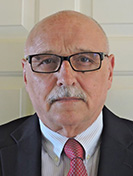 Mr. Tabatsko is a native of New York City. For twenty-two years he was the Administrative Family Magistrate for the Circuit Court for Carroll County. In that capacity he presided over thousands of family law cases: Juvenile Delinquency, Children in Need of Assistance, Divorce, Custody, Visitation and Child Support. He is presently a Legal Specialist with the Foster Care Court Improvement Program of the Court of Appeals of Maryland and the Coordinator of Stephen Ministries at Grace Evangelical Lutheran Church in Westminster, Maryland.
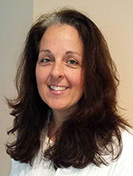 Susan McFadden has been working with “at-risk” and “in-risk” youth and their families since 1992. For eleven years, she worked as a Juvenile Counselor for the Maryland Department of Juvenile Services (DJS). She provided supervision, case management services, and counseling services to youth involved with the criminal justice system. While working for DJS and at present, Ms. McFadden is employed with CHANGE, Inc. providing life skills support services to adult individuals with intellectual disabilities. After obtaining her Master of Arts degree in School Counseling in 2005, she became employed as a Pupil Personnel Worker for Carroll County Public Schools. In this role, she provides support services and advocacy to students and their families. Ms. McFadden is also employed part-time as a Licensed Clinical Professional Counselor.
In 1992, Ms. McFadden earned her BS degree in Sociology from Loyola College in Maryland. In 2005, she earned her MA degree in School Counseling from McDaniel College. In 2011 she obtained her LCPC from the State of Maryland. She has provided professional development classes for Carroll County Public Schools and Maryland Association for Pupil Personnel. Ms. McFadden has also published a book review in the International Association of Dropout and Truancy Prevention Journal. She hopes to continue her education by seeking advanced study in the area of Pastoral Counseling.
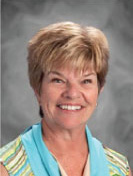 Dolly Mersinger, member of the board, has been a resident of Hampstead, Maryland for 40 years. She is a graduate of Mt. St. Agnes College in Baltimore with a degree in elementary education. Mrs. Mersinger is educator with 37 years of teaching experience in Baltimore City and Carroll County Public Schools. Mrs. Mersinger is a trained facilitator for Community Conferencing of Carroll County. Mrs. Mersinger served as an officer and member of the Board of Trustees of Maryvale Preparatory School in Brooklandville, Maryland and has served as an educational consultant for Hoffman Educational Systems in Duarte, California.
 My name is Brian L. Gass. I am a 1988 graduate of Shippensburg University of PA with a Major in Criminal Justice and a Minor in Psychology. I have worked in the field of Juvenile Justice for 24 years and for the MD Department of Juvenile Services (DJS) for 16 years. I have been the Carroll County Supervisor for DJS since 2014 and oversee intake services, probation, and aftercare supervision for court adjudicated delinquent youth. I work closely with the Juvenile Court, the State’s Attorney and Public Defender’s Office. I also sit on many Inter-Agency boards including the Local Management Board (LMB) and the Local Care Team (LCT) to access and connect children and families with services in an effort to prevent out of home placement for youth. I also work closely with the Carroll County Schools and various mental health and substance abuse providers in the community again in the effort to access services for children and youth in Carroll County. (LCT). I am proud to be a member of the local Community Conferencing Advisory Board for Carroll County and work closely with the Director Delmas Wood to make appropriate referrals to this program for children and parents who are referred to the Department of Juvenile Services.
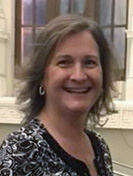 Since 2014, Lisa Aughenbaugh has been the Coordinator of Auxiliary Services and Special Projects at Carroll Community College with primary responsibility for contract management and overseeing the operations of the College’s Information Center. For over 15 years prior to that time, Ms. Aughenbaugh worked, or contracted with, several non-profit organizations in Carroll County including the Community Foundation, the Community Media Center, RCIS, and HSP. Her responsibilities included community relations, fundraising, event management, donor relations, operations and budget management. Ms. Aughenbaugh has previously served on the Board of Directors for The Shepherd’s Staff and the Community Services Council, both in Carroll County.
Ms. Aughenbaugh brings a broad wealth of administrative leadership and fundraising experience to our organization. She also brings a commitment to serving the needs of youth, victims, and those in poverty in our community.
Ms. Aughenbaugh believes every youth deserves a second chance if they have made a poor decision which has landed them in the legal system. They also need the opportunity to see and understand how their choices and actions have impacted not only their victim(s) but also their and their victims’ families. She hopes our work in Community Conferencing can be the link to positively impact and potentially change the life path of many of the youth in our community.
This program was developed with support from the Maryland Mediation & Conflict Resolution Office and Carroll Community College.
Get Involved
Delmas Wood, Program Coordinator & Lead Facilitator
410-386-8161 | CCOCC@carrollcc.edu